
How Do Hook Type Insulation Panels Improve Cold Storage Performance?
Article Overview
Maintaining stable temperatures is one of the biggest challenges in modern cold storage facilities. Whether used in food processing plants, pharmaceutical warehouses, refrigerated distribution centers, or industrial freezing rooms, insulation systems directly influence temperature consistency, energy consumption, and operating costs.
A Hook Type Insulation Panel offers a practical solution through its integrated mechanical hook connection, insulated sandwich structure, and tightly assembled panel joints. Unlike ordinary panel connections, the hook-type locking mechanism helps draw adjacent panels together, improving joint stability and supporting effective sealing.
This guide explains how hook type insulation panels work, their structural characteristics, major benefits, material selection considerations, installation procedures, and maintenance requirements. It also highlights the factors buyers should evaluate before choosing panels for a cold storage project.
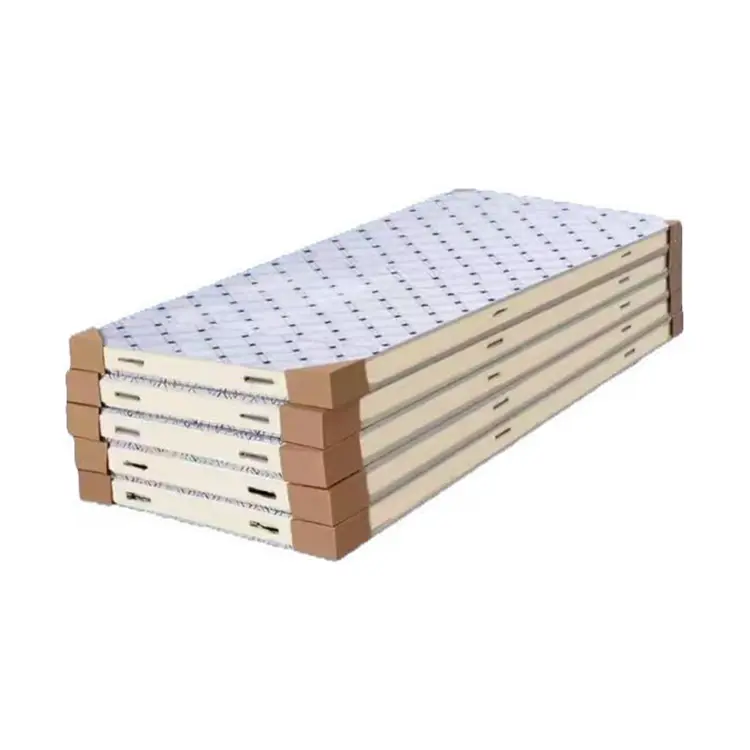
1. What Is a Hook Type Insulation Panel?
A hook type insulation panel is a prefabricated insulated sandwich panel designed with an integrated mechanical locking system. It is commonly used to construct cold rooms, freezer enclosures, refrigerated warehouses, and other temperature-controlled spaces.
The panel generally consists of two protective metal facings and a rigid insulating core. A hook-and-lock mechanism is embedded inside the panel edges during manufacturing. When two panels are positioned together, the locking components engage and pull the adjoining edges tightly against each other.
This connection method makes it possible to assemble insulated enclosures without relying entirely on conventional external fastening methods. Depending on the panel design, the system can also be dismantled and reassembled when a cold storage facility needs to be relocated or expanded.
Key point: A hook type insulation panel is not simply an insulated board with a special edge. Its mechanical connection system is an important part of the overall enclosure design, influencing installation, joint compression, and long-term sealing performance.
Hook Type Panels vs. Conventional Insulation Panels
Conventional insulated panels may use overlapping edges, tongue-and-groove joints, or external fasteners. Hook type panels add a mechanical locking mechanism that helps secure neighboring sections.
| Comparison | Conventional Panel | Hook Type Panel |
|---|---|---|
| Connection method | May use basic joints or external fasteners | Integrated mechanical hook connection |
| Joint compression | Depends on the selected connection design | Mechanical locking draws panel edges together |
| Installation | Varies by construction method | Designed for modular assembly |
| Disassembly | May require removing external fasteners | Can be released using the specified locking tool |
| Typical application | General insulated enclosures | Cold rooms and modular refrigeration facilities |
2. How Does the Hook Connection System Work?
The hook connection system is the defining feature of this type of insulation panel. It is designed to create a secure mechanical connection between adjacent panel sections while helping maintain close contact along the joint.
Understanding the Locking Mechanism
A typical system uses an eccentric hook and a corresponding locking component or pin embedded inside the panel edges. The connection process generally follows these steps:
- Panel positioning: Two adjacent panels are placed in their designated positions, with their tongue-and-groove or matching edge profiles aligned.
- Lock engagement: The internal hook engages with the corresponding locking pin or component.
- Mechanical tightening: An appropriate hex key or manufacturer-specified tool is inserted into the access opening and rotated.
- Panel compression: The eccentric mechanism draws the two panels closer together, helping compress the joint and any integrated gasket.
- Joint inspection: The installer checks alignment, connection tightness, and sealing details before proceeding.
The exact mechanism, tool size, locking direction, and tightening requirements vary between manufacturers. Installers should always follow the technical drawings and installation instructions supplied with the selected panel system.
Why Is Mechanical Connection Important?
Cold storage facilities operate with substantial temperature differences between their internal and external environments. Poorly connected panels can create gaps through which warm, humid air enters the enclosure.
The hook mechanism helps reduce the risk of loose panel connections by applying controlled mechanical compression. When combined with suitable joint profiles, gaskets, and correctly applied sealants, it supports a more continuous insulated enclosure.
3. What Is the Structure of a Hook Type Panel?
The overall performance of a hook type insulation panel depends on several components working together. Understanding these layers helps buyers compare products more accurately.
3.1 Outer and Inner Metal Facings
The metal facings protect the insulation core from physical damage and provide the finished surfaces of the panel. Common options include:
- Color-coated steel: A widely used option for general cold storage applications, offering a finished surface and practical corrosion protection when the coating is properly selected.
- Galvanized steel: Provides a zinc-coated surface designed to improve resistance to corrosion.
- Stainless steel: Suitable for applications requiring additional corrosion resistance, including certain food processing and frequently cleaned environments.
Surface finish, coating quality, sheet thickness, and cleaning requirements should all be considered when selecting the facing material.
3.2 Insulation Core Material
The core is responsible for slowing heat transfer through the panel. Common insulation materials include:
- Polyurethane (PU): A rigid foam insulation material widely used in refrigerated enclosures because of its low thermal conductivity.
- Polyisocyanurate (PIR): A related rigid foam material that may offer different thermal and fire-performance characteristics depending on its formulation and testing.
- Expanded Polystyrene (EPS): Another insulation option used in certain panel systems, with different thermal and mechanical characteristics.
The appropriate core material depends on the required temperature range, applicable fire regulations, energy targets, and project budget. Buyers should request product-specific technical data instead of assuming that every insulation material performs identically.
3.3 Integrated Hook and Lock Components
The locking components are embedded into the panel edges during production. Their position and mechanical quality affect how accurately the panels connect and how reliably the joint can be tightened.
Important considerations include component material, corrosion resistance, locking strength, installation tool compatibility, and the availability of replacement accessories.
3.4 Joint Sealing Components
The panel joint may incorporate matching edge profiles, flexible gaskets, and additional sealing materials. These elements help limit air movement and moisture penetration.
Mechanical locking alone does not guarantee an airtight or vapor-tight enclosure. Joint design and sealing procedures must be evaluated as part of the complete cold room system.
4. How Do Hook Type Panels Improve Cold Storage Performance?
A well-designed hook type insulation panel system can improve the construction and operation of a temperature-controlled enclosure in several ways.
01. Better Joint Stability
Mechanical locking helps keep adjacent panels connected and reduces the risk of poorly secured joints.
02. Improved Sealing Support
Panel compression works with suitable gaskets and sealants to help limit unwanted air leakage.
03. Thermal Efficiency
A continuous insulated envelope helps reduce heat transfer between the cold room and surrounding environment.
04. Modular Installation
Prefabricated panels simplify on-site assembly and can support future modifications.
4.1 Reducing Unwanted Heat Transfer
Heat enters a cold storage enclosure through walls, ceilings, floors, doors, joints, and other building interfaces. If panel connections are poorly aligned or sealed, they can become weak points in the insulation system.
Hook type connections help bring adjacent panel edges together. When the locking system, insulation core, and sealing materials are properly designed, the assembled enclosure can maintain a more consistent thermal barrier.
4.2 Supporting Temperature Stability
Temperature fluctuations can affect stored products, increase refrigeration system workload, and create operational difficulties.
A properly insulated and sealed cold room helps reduce the influence of external temperature changes. This is particularly important for food storage, frozen products, and temperature-sensitive materials.
4.3 Helping Control Operating Costs
Refrigeration equipment consumes energy to remove heat entering the storage space. Improving the insulation envelope can help reduce this thermal load and support more efficient equipment operation.
However, actual energy savings depend on multiple factors, including panel thickness, insulation conductivity, room dimensions, door opening frequency, ambient temperature, refrigeration equipment efficiency, and installation quality.
4.4 Supporting Faster Modular Construction
Traditional cold storage construction can involve more complicated on-site fabrication and connection work. Hook type insulation panels are manufactured as prefabricated sections, allowing installers to connect the panels according to an assembly plan.
This approach can reduce some on-site construction tasks, improve installation organization, and make it easier to coordinate different parts of a cold room project.
5. Which Applications Benefit from Hook Type Insulation Panels?
Hook type insulation panels are particularly useful in projects where temperature control, modular construction, and reliable panel connections are important.
5.1 Food Processing and Storage
Meat, seafood, dairy products, fruits, and vegetables often require controlled storage environments. Insulated panel enclosures help maintain suitable temperatures and support hygienic interior surfaces.
In food-related environments, buyers should pay particular attention to cleanable finishes, corrosion resistance, joint sealing, and compatibility with the facility's sanitation procedures.
5.2 Refrigerated Warehouses
Large distribution facilities need insulated spaces for receiving, storing, and dispatching temperature-sensitive products. Modular panel systems can be used to divide a warehouse into different temperature zones.
The panel configuration should account for room height, ceiling support, door locations, refrigeration equipment, and expected traffic.
5.3 Pharmaceutical and Medical Storage
Certain medicines, vaccines, and medical materials require carefully controlled storage conditions. Insulation panels contribute to the physical enclosure, but the complete facility also requires appropriate temperature monitoring, refrigeration control, alarms, and operational procedures.
5.4 Industrial Freezing Facilities
Industrial freezing rooms operate at lower temperatures and may experience greater temperature differences between the interior and exterior. These applications require careful selection of insulation thickness, joint sealing, vapor control, and structural support.
5.5 Commercial Kitchens and Supermarkets
Restaurants, supermarkets, catering facilities, and food distribution businesses use compact cold rooms and freezer rooms to manage perishable inventory.
Hook type panel construction can be useful where quick installation, limited construction space, and future layout adjustments are important.
6. What Factors Should Buyers Consider?
Choosing the right hook type insulation panel requires more than comparing quotations. A panel that is suitable for a chilled storage room may not be the right choice for a deep-freezing facility.
6.1 Required Operating Temperature
Start by identifying the intended internal temperature and the expected ambient conditions. A facility storing fresh produce has different insulation requirements from one operating as a low-temperature freezer.
The manufacturer should recommend a suitable panel configuration based on the actual operating conditions.
6.2 Panel Thickness and Thermal Conductivity
Panel thickness is one of the main factors affecting thermal resistance. In general, a thicker panel made from the same insulation material provides greater resistance to heat transfer.
Thermal conductivity, commonly expressed in W/(m·K), indicates how readily heat passes through a material. Lower values generally indicate better insulating performance.
| Selection Factor | What to Check | Why It Matters |
|---|---|---|
| Panel thickness | Available thickness options and project calculations | Influences thermal resistance |
| Core material | PU, PIR, EPS, or other specified materials | Affects insulation and other material properties |
| Thermal conductivity | Tested value and test conditions | Helps compare insulation performance |
| Facing material | Steel type, coating, and thickness | Affects durability and corrosion resistance |
| Locking mechanism | Hook material, engagement, and tool requirements | Influences connection reliability |
| Joint sealing | Gaskets, edge profiles, and sealant compatibility | Helps control air and moisture movement |
6.3 Environmental and Corrosion Conditions
Cold storage facilities may operate in humid, coastal, or chemically demanding environments. The facing material should be selected according to exposure conditions and cleaning requirements.
For example, facilities with frequent washdowns may require a different surface specification from ordinary dry storage areas. Corrosion resistance should be considered for both visible metal facings and concealed connection components.
6.4 Fire Performance and Applicable Standards
Fire performance is an important consideration when specifying insulated sandwich panels. Different core materials and formulations have different fire characteristics.
Buyers should request relevant test reports and classifications, such as those based on EN 13501-1 where applicable. The required classification must be checked against local building codes, project specifications, and the intended application.
6.5 Dimensions and Customization
Panel dimensions should match the facility layout and installation requirements. Incorrect sizing can lead to unnecessary cutting, additional joints, material waste, and installation complications.
Before placing an order, confirm the following:
- Required panel length, width, and thickness.
- Wall, ceiling, and floor panel configurations.
- Door and corner panel arrangements.
- Position of refrigeration pipes and electrical penetrations.
- Required accessories and installation tools.
- Packaging, transportation, and delivery requirements.
7. How Should Hook Type Insulation Panels Be Installed?
Correct installation is essential for achieving the intended insulation and connection performance. Even high-quality panels can experience leakage or alignment problems when the supporting structure is uneven or the locking mechanism is incorrectly operated.
The following sequence provides a general overview. The exact installation procedure must follow the selected manufacturer's drawings and instructions.
Step 1: Prepare the Installation Site
Inspect the foundation and supporting surfaces before installation. The floor should be level, clean, dry, and capable of supporting the planned enclosure.
Check the room dimensions against the panel drawings. Confirm that the installation area provides sufficient space for positioning panels and operating the locking tools.
Step 2: Inspect the Panels and Accessories
Before assembly, check the delivered panels for visible damage, deformation, moisture exposure, and incorrect dimensions.
Confirm that all hook components, locking accessories, gaskets, corner profiles, and installation tools are available.
Step 3: Position the Floor and Wall Panels
Follow the manufacturer's recommended assembly sequence. Many modular cold room systems begin with the floor structure, followed by wall panels and supporting corner connections.
Align the panel edges carefully. Do not force together panels that are visibly misaligned or damaged.
Step 4: Engage the Hook Mechanism
Insert the specified tool into the designated access opening. Rotate the locking mechanism in the direction indicated by the manufacturer's instructions until the connection reaches its specified engagement condition.
Avoid excessive force. Over-tightening may damage the locking components or surrounding panel structure.
Step 5: Install Ceiling Panels
Ceiling panels require particular attention to structural support, suspension details, and load distribution. Their installation should follow the approved engineering drawings.
Do not assume that the insulation panel itself can support suspended refrigeration equipment, lighting, or other heavy loads. Additional structural support may be necessary.
Step 6: Complete Joint Sealing and Inspection
Check panel alignment and the condition of all visible joints. Apply specified sealants and complete vapor-control details at corners, floor junctions, ceiling connections, doors, and service penetrations.
Before operating the refrigeration equipment, inspect the enclosure for gaps, damaged seals, and other potential leakage paths.
Installation reminder: The locking mechanism, joint gasket, and sealing materials perform different but complementary functions. A secure mechanical connection should never be treated as a substitute for the complete sealing system.
8. How Can Panel Performance Be Maintained?
Regular inspection helps identify small problems before they affect the overall performance of a cold storage facility.
Routine Maintenance Checklist
- Inspect panel joints: Look for visible gaps, loose connections, damaged gaskets, or deteriorated sealants.
- Check metal surfaces: Identify scratches, coating damage, corrosion, and signs of moisture exposure.
- Examine corners: Pay attention to wall-to-wall, wall-to-floor, and wall-to-ceiling connections.
- Inspect door interfaces: Check door seals and surrounding panel connections for air leakage.
- Monitor condensation: Investigate recurring moisture or frost around panel joints and penetrations.
- Review locking components: Check for signs of mechanical damage when maintenance or repairs require access to the connection system.
Cleaning Recommendations
The cleaning method should be compatible with the panel facing and coating. Use approved cleaning agents and avoid aggressive chemicals or abrasive tools that may damage protective surfaces.
In food processing environments, cleaning procedures should also meet the facility's hygiene requirements.
Preventing Moisture-Related Problems
Moisture entering the panel joints can reduce the effectiveness of the enclosure and contribute to corrosion or deterioration in certain conditions.
Appropriate vapor barriers, continuous sealing, correctly detailed penetrations, and proper ventilation in surrounding building spaces can help reduce moisture-related risks.
9. Common Problems and Practical Solutions
Understanding common installation and operating problems helps facility owners and contractors improve project reliability.
| Common Problem | Possible Cause | Recommended Action |
|---|---|---|
| Cold air leakage at joints | Incorrect alignment or incomplete sealing | Inspect locking engagement and restore the specified joint seal |
| Difficulty locking panels | Misalignment or incompatible tools | Recheck panel positioning and use the correct tool |
| Condensation near connections | Air leakage, thermal bridging, or moisture-control defects | Inspect joints and surrounding vapor-control details |
| Corrosion on metal surfaces | Damaged coatings or unsuitable material selection | Repair surface damage and review environmental compatibility |
| Uneven panel surfaces | Unlevel foundation or incorrect installation | Check supporting surfaces and correct alignment |
| Unexpected temperature fluctuations | Insufficient insulation, leakage, door usage, or refrigeration issues | Evaluate the entire cold room system rather than only the panels |
When a problem involves concealed locking components, damaged insulation cores, or structural connections, repairs should be handled by qualified technicians. Unapproved drilling, cutting, or forced disassembly may cause additional damage.
10. Frequently Asked Questions About Hook Type Insulation Panels
Q1: What is the main purpose of a hook type insulation panel?
Its main purpose is to provide an insulated enclosure with an integrated mechanical connection system. The hook mechanism joins adjacent panels and helps compress their connecting edges, supporting stable assembly and effective joint sealing.
Q2: Are hook type insulation panels suitable for freezer rooms?
Yes. They can be used in freezer rooms when the insulation core, panel thickness, facing materials, joint design, and sealing system are selected for the required operating temperature and environmental conditions.
Q3: What materials are commonly used in hook type insulation panels?
Common configurations include color-coated steel, galvanized steel, or stainless steel facings combined with PU, PIR, or other suitable insulation cores. The actual material combination depends on the product specification.
Q4: Can hook type panels be disassembled and reused?
Many systems are designed to be released using the specified locking tool, making disassembly possible. Reuse depends on the condition of the panels, locking components, gaskets, and metal facings after removal.
Q5: Do hook type insulation panels prevent all air leakage?
No panel connection can guarantee zero leakage under every installation condition. Proper alignment, mechanical engagement, suitable gaskets, sealants, and correctly treated corners and penetrations are all necessary for effective airtightness.
Q6: How do I choose the correct panel thickness?
Consider the target storage temperature, external ambient conditions, insulation core properties, room dimensions, and energy requirements. Consult the manufacturer for a technical recommendation based on the actual project.
Q7: Are hook type insulation panels suitable for food processing facilities?
They can be suitable when the panel surface, joint design, corrosion resistance, and cleaning compatibility meet the facility's hygiene and operational requirements. Stainless steel facings may be considered for demanding cleaning environments.
Q8: What should I check before ordering hook type panels?
Confirm the required dimensions, panel thickness, insulation core, metal facing, hook mechanism, joint sealing details, fire performance, applicable standards, accessories, packaging, and delivery schedule.
Q9: Can hook type insulation panels be customized?
Many manufacturers offer customized panel dimensions, thicknesses, facing materials, and configurations. Available options depend on the manufacturer's production capabilities and the requirements of the project.
Q10: Why is professional installation important?
Professional installation helps ensure correct panel alignment, locking engagement, joint sealing, and structural support. These factors are essential for achieving the intended performance and reducing the risk of future maintenance problems.
11. Conclusion: Choosing the Right Hook Type Insulation Panel
Hook type insulation panels provide a practical solution for constructing modular cold storage enclosures. Their integrated mechanical locking systems help secure adjoining panels, while the insulated sandwich structure provides the thermal barrier needed for temperature-controlled environments.
However, reliable performance depends on more than the hook mechanism alone. Insulation core quality, panel thickness, metal facings, joint sealing, installation accuracy, and ongoing maintenance all contribute to the performance of the finished facility.
For contractors, refrigeration equipment manufacturers, and cold storage project owners, selecting panels according to actual operating conditions is the most effective way to build a dependable insulation system.
Looking for Reliable Insulation Panel Solutions?
Changzhou Hanyork Refrigeration Equipment Co., Ltd. is committed to providing refrigeration equipment solutions for industrial and commercial applications.
Whether you are planning a new cold storage facility, upgrading an existing refrigeration system, or sourcing insulation panel solutions for your next project, selecting the right configuration is an important first step.
Contact us to discuss your project requirements and explore suitable refrigeration solutions for your business.
Contact UsRelated News
- How Does a U Type Top Discharge Air Unit Improve Airflow and Cooling Efficiency?
- HANYORK Extruded Polystyrene Board Offers Advanced Closed-Cell Insulation for Construction, Cold Storage, and Industrial Use
- Cold Storage Doors: Practical Solutions for Temperature-Controlled Environments
- PIR Insulation Boards: A Practical Guide – Selection, Installation, and Common Pitfalls
- Is a Manual Sliding Cold Storage Door the Best Solution for Modern Refrigeration Facilities
- Is Containerized Mobile Cold Storage the Ultimate Solution for Flexible Refrigeration Needs
Leave me a message

News Recommendations