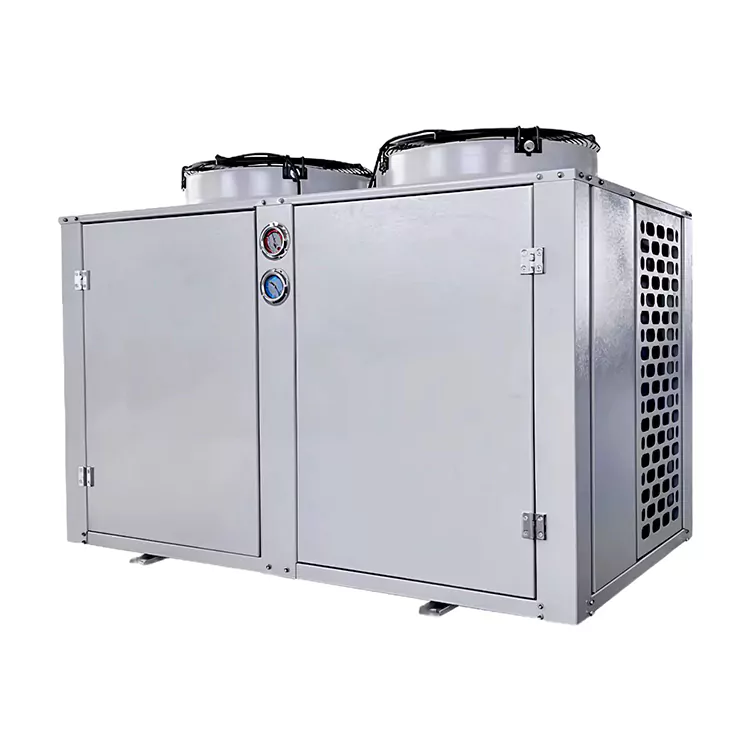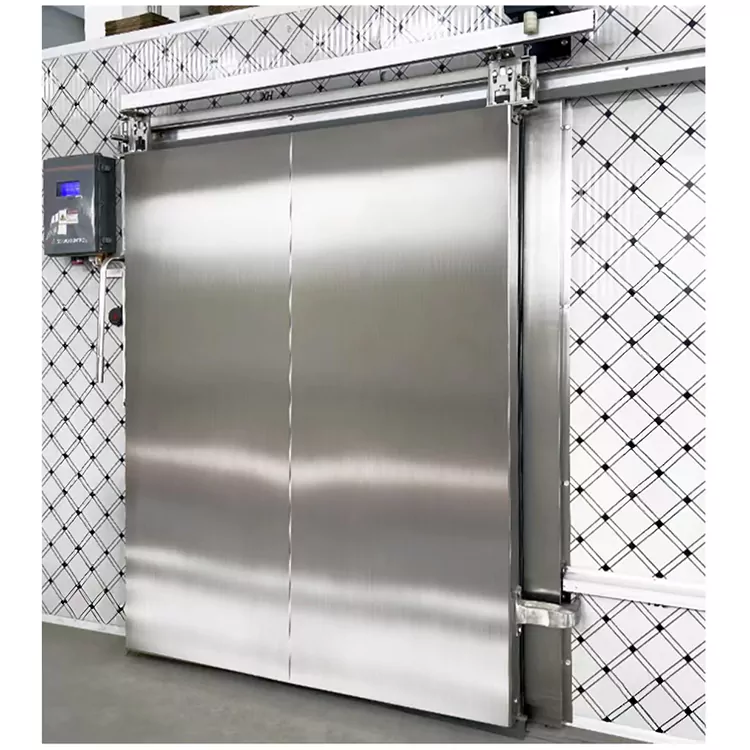

A reliable refrigeration system depends on more than compressor capacity. Air circulation, heat exchange, equipment arrangement, and operating conditions all influence cooling performance. A U Type Top Discharge Air Unit is designed to provide an organized airflow path and efficient heat exchange in commercial and industrial refrigeration applications.
This guide explains how this refrigeration unit works, which components determine its performance, where it can be used, and what buyers should evaluate before purchasing. Whether you are planning a new cold storage facility or upgrading an existing refrigeration system, understanding these factors can help you make a more practical equipment decision.
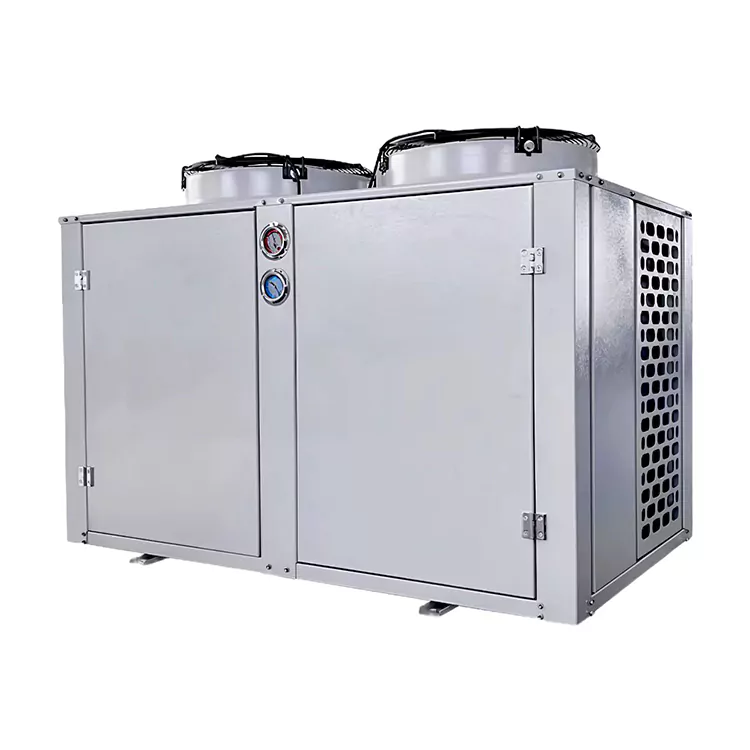
Table of Contents
- What Is a U Type Top Discharge Air Unit?
- How Does a U Type Top Discharge Air Unit Work?
- What Are Its Main Components?
- How Does the U-Shaped Design Improve Airflow?
- What Are the Main Operational Benefits?
- Where Is This Refrigeration Unit Used?
- How Does It Compare With Other Air Discharge Designs?
- How Should You Select the Right Unit?
- What Should You Know About Installation?
- How Can You Maintain Long-Term Performance?
- Common Operating Problems and Solutions
- Future Developments in Refrigeration Equipment
- Frequently Asked Questions
- Final Thoughts
1. What Is a U Type Top Discharge Air Unit?
A U Type Top Discharge Air Unit is a refrigeration condensing unit configuration designed with a U-shaped airflow arrangement and an upward-facing air discharge. It is used in refrigeration systems where equipment layout, heat removal, and installation space must be carefully considered.
Unlike conventional side-discharge configurations, which release heated air horizontally, a top-discharge design directs the airflow upward. This arrangement can help manage the movement of air around the equipment and reduce conflicts with nearby walls or installations when the surrounding space is properly planned.
The U-shaped configuration provides a compact equipment arrangement. Depending on the specific model, it may integrate the compressor, condenser, fans, electrical controls, and associated refrigeration components into a coordinated assembly.
Why Does the Configuration Matter?
In a refrigeration system, the condensing unit must reject heat absorbed from the refrigerated space, together with the heat generated during compression. If hot discharge air is repeatedly drawn back into the condenser, condensing temperature and operating pressure may rise. This can reduce system efficiency and increase the workload on the compressor.
A suitable top-discharge arrangement helps guide heated air away from the equipment. However, actual performance still depends on installation clearance, ambient temperature, ventilation, condenser sizing, and the overall refrigeration design.
2. How Does a U Type Top Discharge Air Unit Work?
The working principle is based on the vapor-compression refrigeration cycle. The unit works together with the evaporator and other refrigeration components to remove heat from a controlled space and release it into the surrounding environment.
The Refrigeration Process Step by Step
Inside the cold room, the evaporator absorbs heat from the circulating air. The refrigerant changes state as it collects this thermal energy and returns toward the compressor as low-pressure vapor.
The compressor draws in low-pressure refrigerant vapor and compresses it into a high-pressure, high-temperature vapor. This process prepares the refrigerant to release the collected heat through the condenser.
The hot refrigerant passes through the condenser coil. Fans move ambient air across the coil, allowing heat to transfer from the refrigerant to the surrounding air. The refrigerant then condenses into a high-pressure liquid.
The liquid refrigerant passes through the expansion device, where its pressure and temperature decrease. It then enters the evaporator to absorb more heat.
The refrigeration cycle repeats as long as cooling is required. The top-discharge fan arrangement directs the condenser's heated air upward, helping prevent unnecessary heat accumulation around the unit when sufficient ventilation clearance is provided.
Why Is Airflow Important?
Even a properly selected compressor cannot deliver its intended performance if the condenser cannot reject heat effectively. Insufficient ventilation, blocked air inlets, or hot-air recirculation can increase condensing pressure and reduce operating efficiency.
For this reason, the airflow design should be evaluated together with the refrigeration capacity, condenser surface area, fan performance, and installation environment.
3. What Are the Main Components of a U Type Top Discharge Air Unit?
Understanding the main components makes it easier for buyers to evaluate equipment quality, maintenance requirements, and compatibility with an existing refrigeration system.
| Component | Main Function | What Buyers Should Check |
|---|---|---|
| Compressor | Compresses refrigerant vapor and drives the refrigeration cycle. | Cooling capacity, refrigerant compatibility, operating range, and reliability. |
| Condenser Coil | Transfers heat from the refrigerant to the surrounding air. | Heat exchange area, material, fin spacing, and corrosion protection. |
| Axial Fans | Move ambient air through the condenser and discharge heated air upward. | Air volume, motor specifications, noise, and electrical requirements. |
| Refrigerant Piping | Connects the refrigeration components and carries refrigerant. | Pipe dimensions, pressure rating, connection quality, and compatibility. |
| Electrical Control System | Controls operation and supports equipment protection. | Electrical configuration, protection devices, and control compatibility. |
| Protective Housing | Provides structural protection for internal components. | Material strength, corrosion resistance, and maintenance access. |
The Importance of Component Compatibility
Individual components should not be selected independently without considering the complete system. For example, an oversized fan does not automatically improve refrigeration efficiency if the condenser coil and airflow path are not designed to work with it.
Similarly, compressor selection must match the required cooling load, refrigerant, evaporating temperature, and condensing conditions. A balanced configuration is more important than simply choosing components with the highest individual ratings.
4. How Does the U-Shaped Design Improve Airflow?
Airflow management is one of the main reasons buyers consider a U Type Top Discharge Air Unit. Its design provides an organized arrangement for air intake and upward discharge, helping the equipment fit different installation layouts.
4.1 Upward Heat Discharge
The top-facing air outlet directs heated condenser air upward rather than toward the side of the equipment. This can be useful where horizontal clearance is limited or where side discharge would interfere with nearby machinery.
For example, an equipment area surrounded by service walkways, walls, or other mechanical systems may benefit from a carefully planned upward discharge path. The installation must still provide enough overhead clearance to prevent hot air from accumulating near the unit.
4.2 Reduced Risk of Hot-Air Recirculation
Hot-air recirculation occurs when air discharged from the condenser returns to its air inlet. This means the condenser receives warmer air instead of fresh ambient air, making heat rejection more difficult.
A suitable top-discharge configuration can help reduce this risk by directing heated air away from the intake area. However, the benefit depends on the surrounding building structure, roof height, neighboring equipment, and ventilation conditions.
4.3 More Flexible Equipment Arrangement
The compact U-shaped arrangement can help engineers organize refrigeration equipment within limited mechanical spaces. It may also simplify the planning of service access and piping routes when the unit dimensions are matched to the installation site.
4.4 Better Coordination With the Refrigeration System
Effective airflow supports condenser heat exchange, which is directly connected to the refrigeration cycle. When the condenser operates under appropriate conditions, the compressor can work within its intended operating range more consistently.
5. What Are the Main Operational Benefits?
5.1 Efficient Heat Rejection
Condenser performance has a direct influence on the efficiency of the refrigeration cycle. A properly designed fan and condenser arrangement helps transfer heat to the surrounding air and maintain suitable condensing conditions.
By managing the discharge direction, a top-discharge unit can be easier to integrate into installation environments where horizontal airflow is restricted.
5.2 Space-Conscious Equipment Layout
Industrial refrigeration facilities often contain piping, electrical systems, storage equipment, and maintenance walkways. A compact unit arrangement can make equipment planning easier, especially when the available floor area is limited.
5.3 More Convenient System Planning
Equipment with a defined upward airflow direction gives designers a clear reference when arranging the machinery area. This can simplify coordination with walls, service routes, and adjacent equipment, provided that the required operating clearances are respected.
5.4 Support for Stable Refrigeration Operation
Consistent heat rejection helps the refrigeration system maintain appropriate operating pressures. This supports reliable operation and can reduce unnecessary stress caused by poor ventilation or excessive condensing temperatures.
5.5 Maintenance and Service Accessibility
A well-planned unit layout should provide access to the compressor, condenser coil, fan motors, electrical components, and service connections. Easy access can reduce maintenance time and make routine inspections more manageable.
6. Where Is a U Type Top Discharge Air Unit Used?
U Type Top Discharge Air Units are suitable for refrigeration projects where the required cooling capacity, equipment arrangement, and heat rejection conditions match the unit's design.
Cold Storage Warehouses
Cold storage warehouses require dependable refrigeration to maintain suitable conditions for stored products. A properly selected refrigeration unit can support continuous operation and help maintain the required storage temperature.
Food Processing Facilities
Food processing plants may require refrigeration for raw material storage, intermediate processing areas, and finished product holding rooms. Equipment selection should account for heat loads from products, machinery, personnel, and frequent door opening.
Cold Chain Logistics Centers
Distribution facilities handle products moving between storage, transportation, and delivery. Their refrigeration systems must respond to changing operational loads while maintaining reliable temperature control.
Pharmaceutical and Temperature-Controlled Storage
Some pharmaceutical and specialty storage applications require carefully controlled environmental conditions. Equipment selection should consider the specified temperature range, monitoring requirements, redundancy strategy, and applicable industry regulations.
Commercial Refrigeration Projects
Large commercial refrigeration facilities may also use this configuration when the available installation area and required cooling capacity are suitable.
| Application | Typical Cooling Requirement | Important Selection Factor |
|---|---|---|
| Cold storage warehouse | Continuous temperature maintenance | Storage temperature and total heat load |
| Food processing plant | Cooling during production and storage | Production schedule and hygiene conditions |
| Logistics center | Variable refrigeration demand | Door opening and product turnover |
| Pharmaceutical storage | Precise temperature control | Monitoring and operational reliability |
| Commercial refrigeration | Application-dependent cooling | Space, noise, and operating conditions |
7. How Does It Compare With Other Air Discharge Designs?
Different refrigeration unit configurations are developed to address different installation and ventilation requirements. A U Type Top Discharge Air Unit should therefore be compared with other designs according to the actual project environment rather than appearance alone.
| Comparison Factor | U Type Top Discharge | Side Discharge | V Type Top Discharge |
|---|---|---|---|
| Air discharge direction | Upward | Horizontal | Upward |
| Equipment arrangement | U-shaped configuration | Side-facing airflow arrangement | V-shaped configuration |
| Installation consideration | Requires suitable overhead clearance | Requires adequate side clearance | Requires suitable overhead clearance |
| Potential application advantage | Useful where upward heat discharge suits the layout | Useful where horizontal ventilation is available | Useful for projects designed around a V-shaped unit structure |
| Selection priority | Cooling load and overhead ventilation | Cooling load and side ventilation | Cooling load and equipment dimensions |
There is no universally best discharge configuration. A side-discharge unit may be appropriate for an open mechanical area, while a top-discharge unit may be more suitable when horizontal clearance is restricted. U-type and V-type arrangements should be evaluated using their actual dimensions, fan specifications, cooling capacity, and installation requirements.
8. How Should You Select the Right U Type Top Discharge Air Unit?
Choosing a refrigeration unit based only on horsepower or purchase price can lead to performance problems. A more reliable selection process starts with the operating requirements of the entire refrigeration project.
8.1 Calculate the Required Cooling Capacity
The cooling load is the foundation of equipment selection. It includes heat entering through the insulated structure, heat from products, internal equipment, lighting, personnel, and air infiltration.
Important information includes:
- Cold room length, width, and height.
- Required room temperature and target product temperature.
- Product type, quantity, and incoming temperature.
- Daily product loading and unloading volume.
- Door-opening frequency and operating schedule.
- Insulation panel thickness and thermal performance.
8.2 Confirm the Operating Temperature Range
Different refrigeration applications require different evaporating temperatures. A chilled food room and a frozen storage room cannot automatically use the same equipment configuration.
Check the compressor operating envelope, refrigerant, evaporating temperature, and condensing temperature before confirming the model.
8.3 Evaluate Ambient Temperature
Ambient temperature affects condenser performance. Facilities in hot climates may require additional consideration of condenser capacity, airflow, and equipment operating limits.
Ask the manufacturer to confirm the rated cooling capacity under the actual design conditions rather than relying on a nominal rating without its testing conditions.
8.4 Check Power Supply Requirements
Verify the available voltage, phase, frequency, starting current, and electrical protection requirements. The selected unit must be compatible with the site's electrical infrastructure.
8.5 Consider Refrigerant Compatibility
Refrigerant selection affects equipment design, operating pressure, environmental compliance, and servicing requirements. Confirm that the compressor, valves, piping, and other components are suitable for the specified refrigerant.
8.6 Review Dimensions and Maintenance Space
Request an equipment drawing before ordering. Check the unit footprint, height, air inlet and outlet locations, piping connections, lifting requirements, and access space for maintenance.
8.7 Compare More Than the Purchase Price
A lower initial price may not represent the lowest long-term operating cost. Consider energy consumption, component availability, maintenance access, warranty terms, and technical support.
9. What Should You Know About Installation?
Correct installation is essential for achieving the intended performance of a U Type Top Discharge Air Unit. Even a high-quality unit can experience operating problems when airflow is blocked or the surrounding environment is unsuitable.
Installation Checklist
- Choose a suitable location: Install the unit on a stable foundation that can support its operating weight.
- Provide adequate ventilation: Keep air inlets unobstructed and ensure that heated discharge air has a suitable escape path.
- Maintain overhead clearance: Avoid placing ceilings, beams, or other equipment too close to the top air outlet.
- Plan refrigerant piping: Follow the equipment manufacturer's piping recommendations and applicable refrigeration standards.
- Check electrical connections: Confirm the supply voltage, grounding, protection devices, and wiring specifications.
- Allow maintenance access: Ensure technicians can safely inspect and service the compressor, condenser, fans, and controls.
- Test before operation: Complete the required pressure, leak, electrical, and commissioning checks before normal use.
Why Is Overhead Clearance Important?
Because the unit discharges heated air upward, the space above the outlet is especially important. If the airflow is restricted by a low ceiling or poorly positioned structure, hot air may accumulate and return toward the condenser intake.
The required clearance should be confirmed using the manufacturer's installation drawings and technical recommendations. A general distance should not be applied to every model or building layout.
10. How Can You Maintain Long-Term Performance?
Routine maintenance helps preserve heat exchange performance, identify early signs of equipment wear, and reduce unexpected interruptions. Maintenance frequency should be based on the manufacturer's instructions, operating hours, and site conditions.
Regular Maintenance Tasks
| Maintenance Item | Recommended Inspection | Reason |
|---|---|---|
| Condenser coil | Check for dust, grease, debris, and fin damage. | Maintain effective heat transfer. |
| Fan assembly | Inspect blades, motors, vibration, and unusual noise. | Maintain stable airflow. |
| Electrical system | Check wiring, terminals, protection devices, and controls. | Support safe and reliable operation. |
| Refrigerant circuit | Check operating pressures and signs of leakage. | Identify abnormal refrigeration conditions. |
| Compressor | Monitor temperature, noise, vibration, and operating current. | Identify potential mechanical or electrical problems. |
| Equipment structure | Inspect fasteners, panels, and signs of corrosion. | Maintain structural condition. |
Keep the Condenser Clean
Dust and dirt on condenser fins restrict airflow and reduce heat transfer. In facilities with high airborne dust, grease, or other contaminants, condenser cleaning may need to be performed more frequently.
Cleaning should follow the manufacturer's procedures. Avoid damaging the fins or using cleaning methods that are unsuitable for the coil material.
Monitor Operating Conditions
Record operating temperatures, pressures, current, and unusual changes in noise or vibration. Comparing these records over time can help maintenance personnel identify performance deterioration before it develops into a major failure.
Refrigerant handling and electrical repairs should only be carried out by qualified technicians using appropriate procedures and safety equipment.
11. Common Operating Problems and Solutions
Understanding common refrigeration problems can help facility operators communicate more effectively with maintenance technicians and equipment suppliers.
| Problem | Possible Cause | Suggested Action |
|---|---|---|
| High condensing pressure | Dirty condenser, poor ventilation, high ambient temperature, or fan malfunction. | Inspect the condenser, airflow path, fan operation, and operating conditions. |
| Insufficient cooling | Incorrect capacity selection, abnormal refrigerant conditions, or excessive heat load. | Review the cooling load and ask a qualified technician to inspect the system. |
| Unusual fan noise | Loose fasteners, damaged blades, bearing wear, or vibration. | Stop and inspect the fan assembly according to safety procedures. |
| Frequent compressor cycling | Control settings, load changes, sensor issues, or system faults. | Check controls, sensors, and refrigeration operating conditions. |
| Higher energy consumption | Dirty heat exchangers, poor insulation, air leakage, or inefficient operating conditions. | Review equipment condition, room insulation, and system settings. |
When Should You Contact a Technician?
Persistent high-pressure alarms, refrigerant leakage, electrical faults, compressor overheating, and repeated protective shutdowns require professional inspection. Repeatedly resetting protection devices without identifying the cause can create additional equipment risks.
12. Future Developments in Refrigeration Equipment
Industrial refrigeration continues to develop as businesses seek better energy management, more reliable temperature control, and improved equipment monitoring.
Intelligent Monitoring
Modern control technologies can provide information about operating temperatures, pressure conditions, electrical performance, and equipment alarms. Better access to operating data helps maintenance teams identify unusual conditions and plan servicing.
Energy-Conscious System Design
Improving refrigeration efficiency requires attention to the entire system, including compressors, condensers, evaporators, insulation, and controls. Matching equipment capacity to the actual load can help avoid unnecessary energy consumption.
Environmentally Responsible Refrigerants
Refrigerant regulations and environmental requirements continue to influence refrigeration equipment development. Buyers should consider the refrigerant's regulatory status, safety classification, system compatibility, and long-term service availability in their target market.
More Flexible Equipment Configurations
As cold chain facilities become more diverse, refrigeration equipment needs to accommodate different room dimensions, operating temperatures, and installation conditions. Configuration options and application-specific engineering support are increasingly important when planning new projects.
13. Frequently Asked Questions About U Type Top Discharge Air Units
Q1: What is a U Type Top Discharge Air Unit mainly used for?
A U Type Top Discharge Air Unit is used in refrigeration systems where upward condenser airflow and a compact equipment arrangement suit the installation environment. Typical project types include cold storage facilities, food processing plants, and industrial refrigeration applications.
Q2: How does a top-discharge unit differ from a side-discharge unit?
The main difference is the direction in which condenser air is discharged. A top-discharge unit releases heated air upward, while a side-discharge unit releases it horizontally. The appropriate design depends on available ventilation space and equipment positioning.
Q3: Does a U Type Top Discharge Air Unit reduce energy consumption?
It can support efficient operation when the airflow configuration, condenser, compressor, and installation environment are properly matched. Actual energy consumption depends on system capacity, ambient conditions, operating load, maintenance, and control settings. No specific saving percentage should be assumed without comparable test data.
Q4: Can this unit be installed in a small equipment room?
It may be suitable for space-conscious installations, but the available area must provide sufficient air intake, overhead discharge clearance, and service access. Always confirm the manufacturer's installation dimensions and ventilation requirements.
Q5: How do I determine the correct cooling capacity?
Calculate the total refrigeration load using room dimensions, insulation performance, product type, product entry temperature, loading volume, door-opening frequency, internal heat sources, and required storage temperature. A refrigeration engineer or equipment supplier can use these details to recommend a suitable model.
Q6: What information should I provide when requesting a quotation?
Provide the application, cold room dimensions, target temperature, product information, ambient temperature, power supply, installation location, and expected operating schedule. Equipment drawings and existing system information are also helpful for replacement projects.
Q7: How often should a U Type Top Discharge Air Unit be maintained?
Maintenance intervals depend on operating conditions, environmental cleanliness, and manufacturer recommendations. Regular condenser cleaning, fan inspections, electrical checks, and refrigeration system monitoring are important for long-term performance.
Q8: Can a U Type Top Discharge Air Unit work in high ambient temperatures?
Suitability depends on the unit's rated operating range, condenser capacity, refrigerant, and installation ventilation. Buyers should provide the maximum expected ambient temperature so the supplier can verify the equipment selection.
Q9: Is the U-shaped configuration suitable for every cold storage project?
No. The configuration should be evaluated against cooling demand, available installation space, ventilation conditions, equipment capacity, and service requirements. Other configurations may be more appropriate for some projects.
Q10: Why should I choose an experienced refrigeration equipment supplier?
An experienced supplier can help assess application conditions, verify equipment compatibility, provide technical documentation, and support installation and maintenance planning. This reduces the risk of selecting equipment that does not match the project's actual operating requirements.
14. Final Thoughts: Making a Better Refrigeration Equipment Decision
A U Type Top Discharge Air Unit can be a practical solution for refrigeration projects that require organized upward airflow, effective condenser heat rejection, and a compact equipment arrangement. Its performance, however, depends on more than the unit's physical configuration.
Cooling capacity, compressor selection, condenser design, fan performance, ambient temperature, installation clearance, and routine maintenance must all work together to achieve reliable operation.
For buyers and project engineers, the best approach is to evaluate the complete refrigeration application before selecting a model. Providing accurate technical information to the supplier helps ensure that the equipment is properly matched to the site's cooling requirements and operating conditions.
Working with a qualified manufacturer also makes it easier to obtain technical guidance, confirm configuration details, and plan long-term equipment support.
Looking for a Reliable U Type Top Discharge Air Unit?
Choosing the right refrigeration equipment is an important step toward improving cold storage performance and maintaining dependable temperature control.
Changzhou Hanyork Refrigeration Equipment Co., Ltd. provides refrigeration equipment and cold chain solutions for different industrial and commercial applications. Our team can help you evaluate project requirements and identify a suitable refrigeration configuration.
Whether you are planning a new cold storage facility, upgrading an existing refrigeration system, or sourcing equipment for distribution, we welcome your inquiry.
Contact us today to discuss your cooling requirements, request product information, and receive professional assistance with your refrigeration project.
Website: www.hycoldtech.com
Email: hanyork@hycoldtech.com
Tel: +86-13775205499